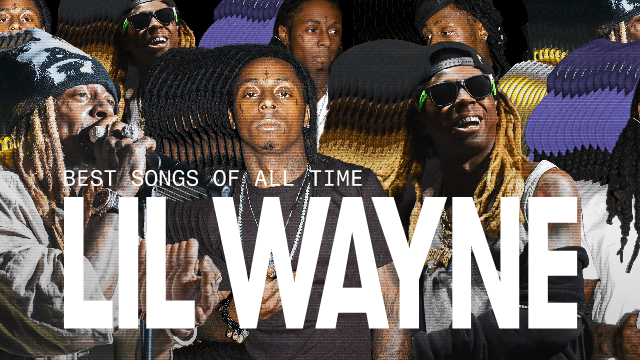
Beyond 50 Projects: The Enduring Impact of Lil Wayne's Music
In the expansive universe of hip-hop, few constellations shine as brightly and consistently as Lil Wayne. More than just an artist, he is a phenomenon – a lyrical architect, a genre-bending innovator, and a cultural touchstone whose influence has reverberated for decades. With a discography boasting no fewer than 50 mixtapes, albums, and EPs, his prolific output alone sets him apart. Yet, it's not merely the volume of his work but the profound impact of each release, the evolution of his sound, and his unparalleled lyrical prowess that have cemented his status as a true legend. From the streets of New Orleans to global superstardom, Lil Wayne has consistently pushed boundaries, proving that true artistry knows no limits.
The Prolific Powerhouse: A Discography of Dominance
To call Lil Wayne prolific would be an understatement; he is a veritable music factory. Before his mainstream explosion, the underground hip-hop scene was already well-acquainted with his genius. His relentless output of mixtapes and early albums fostered a dedicated fanbase, hungry for his intricate wordplay and distinctive delivery. This consistent grind, often releasing multiple projects in a single year, wasn't just about quantity; it was about honing his craft, experimenting with flows, and building an unparalleled catalog that would serve as the foundation for his future empire. Each release, whether a mixtape like Da Drought 3 or an early Carter installment, added another layer to his developing legend, proving that his hunger for creation was as insatiable as his talent.
Tha Carter III: The Mainstream Breakthrough and Lyrical Zenith
While his legend was already brewing, 2008 marked an undeniable shift with the release of Tha Carter III. This album wasn't just a moment; it was a movement that unequivocally proved what the underground had long celebrated: Lil Wayne possessed not only unparalleled lyrical prowess but also an undeniable commercial sensibility. It stands as his most commercially and critically successful offering to date, a masterclass in balancing artistic integrity with radio appeal.
Enlisting a star-studded roster of hit-making producers, including the visionary Kanye West, the high-energy Swizz Beatz, the dynamic Play-N-Skillz, and the late Static Major, Wayne meticulously crafted an album designed to conquer. Despite receiving a wealth of instrumentals, including a reported 20 from Kanye West, Lil Wayne famously exercised artistic restraint, utilizing only three of West's tracks, such as the soulful "Let the Beat Build" and the smooth "Comfortable." This deliberate curation resulted in one of Wayne’s most focused projects, where every beat served his vision.
The album's success was spearheaded by an iconic trio of singles: "Lollipop," with its infectious auto-tuned hook, became a global sensation. "A Milli" showcased Wayne's raw, unfiltered lyrical dexterity over a minimalist beat, while "Got Money" (featuring T-Pain) solidified his commercial dominance. These tracks skyrocketed him to global popularity, earning him his first Grammy wins and permanently etching his name into the annals of music history. Beyond the singles, Tha Carter III delivered diverse cuts like the love-centric "Mrs. Officer" and the Babyface-assisted "Comfortable," both of which became instant classics. Even if Lil Wayne himself reportedly claims ambivalence towards the album, stating it "holds no significance" for him, to fans and critics, it remains a mid-2000s masterpiece – a record that, even if just for a moment, backed up his audacious claim of being the best rapper alive.
Evolving Sounds: Lil Wayne's Genre-Blending Innovation
The narrative of Lil Wayne's impact doesn't end with Tha Carter III; it merely shifted gears. His subsequent works, like Tha Carter IV, continued to demonstrate his relentless pursuit of new sonic territories. On tracks such as "6 Foot 7 Foot" and "Blunt Blowin'," his lyrical gymnastics remained unparalleled, with lines like, "If time is money, I’m an hour past paid," serving as prime examples of his clever wordplay and boastful confidence. But Tha Carter IV also marked a significant exploration into new sounds.
Wayne's willingness to experiment led him to much acclaim, notably with the acoustic guitar-assisted "How to Love." This unexpected foray into a more melodic, even vulnerable, style showcased his versatility and broadened his appeal far beyond traditional hip-hop confines. He further turned his eye to the world of R&B, collaborating with rising stars like Drake on "She Will" and R&B legend John Legend on "So Special." These collaborations were not mere features; they were genuine fusions that demonstrated Lil Wayne's ability to seamlessly adapt and even lead in different genres. This continuous evolution from raw lyrical prowess to genre-blending experimentation is a testament to his enduring artistic curiosity and ability to stay fresh in an ever-changing industry. For a deeper dive into his sonic journey, explore Lil Wayne's Evolution: From Lyrical Prowess to Genre Blending.
The Unwavering Influence: A Legacy Beyond Sales
Beyond his staggering sales figures and critical accolades, Lil Wayne's enduring impact is most evident in his pervasive influence on contemporary music. He didn't just rap; he invented new cadences, popularized unique ad-libs, and championed an unapologetically eccentric approach to lyricism that has inspired countless artists across generations. From the late 2000s onwards, it was virtually impossible to find a rapper who hadn't, in some way, been touched by Wayne's style, whether it was his punchline-heavy bars, his autotune experimentation, or his fearless embrace of melody.
His dedication to his craft, even during periods of perceived slowdown, demonstrated a commitment to artistic integrity that resonates deeply within the industry. Many artists openly credit him as a mentor or a primary influence, acknowledging how he broadened the scope of what was possible in hip-hop. Moreover, his role as a label-head through Young Money Entertainment allowed him to discover and foster some of the biggest talents of the 21st century, including Drake and Nicki Minaj. This extended impact, from his own mic to the careers he launched, solidifies his legacy as a true kingmaker in modern music.
Conclusion
Lil Wayne's journey is a powerful testament to the enduring impact of raw talent, relentless work ethic, and fearless innovation. From his early days as a hungry lyricist to his reign as a global superstar and his continued evolution as an artist and mogul, his influence is undeniable. With over 50 projects under his belt, each contributing a unique chapter to his story, he has not only shaped the sound of hip-hop but has also inspired a generation of artists to push their own creative boundaries. Lil Wayne is more than just a rapper; he is a living legend whose contributions to music continue to resonate, proving that his impact is truly timeless.